
Chicago: The Unexpected Reconstruction

Chicago has an interesting history of reconstruction. While not being affected by the civil war directly with a desolated landscape, it was still affected in many different ways during the reconstruction era with constant African Americans flooding in. To go along with that one Chicago’s most prominent and tragic historical moment happened during the reconstruction era, that being the Great Chicago Fire.
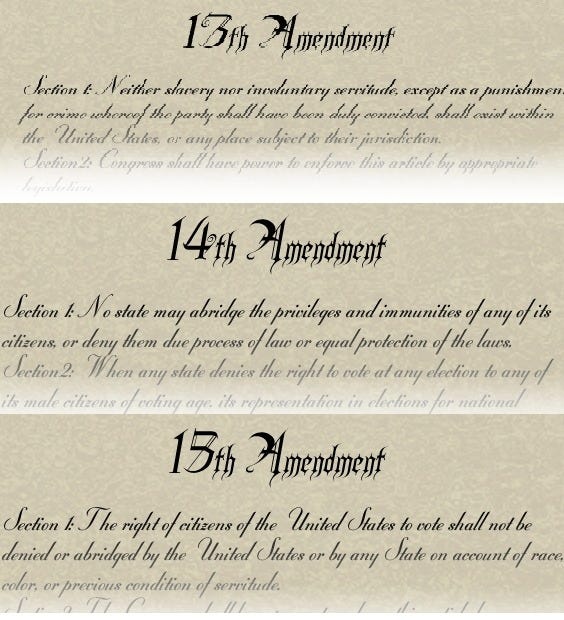
With the end of the Civil War and the beginning of the Reconstruction Era, Africans Americans rightfully took advantage of their new amendment rights being the 13th, 14th, and 15th amendments, trying to secure the equal rights of the new emancipation. Slavery was finally banned, African Americans had defined citizenship by birth and naturalization, and the 15th amendment helped defend voting rights against racial discrimination.
With the rise of more black politicians campaigning for black rights in the south and north, Jim Crow laws began to be instituted into different southern states, in different forms and further segregated black individuals.
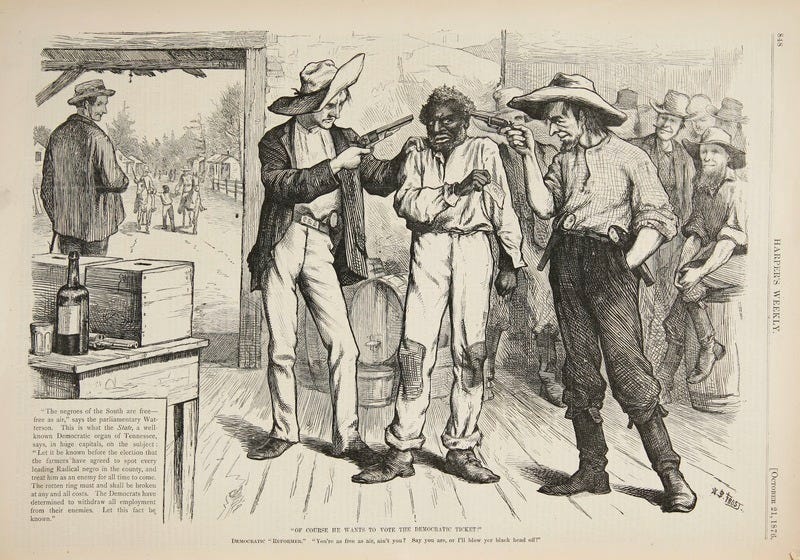
As a result, the Great Migration brought 500,000 Black Americans to Chicago. Seeking to escape segregation and racial violence in the Jim Crow South and eager for better economic opportunities, 1.6 million southern Blacks moved north and west starting in the 1910s.
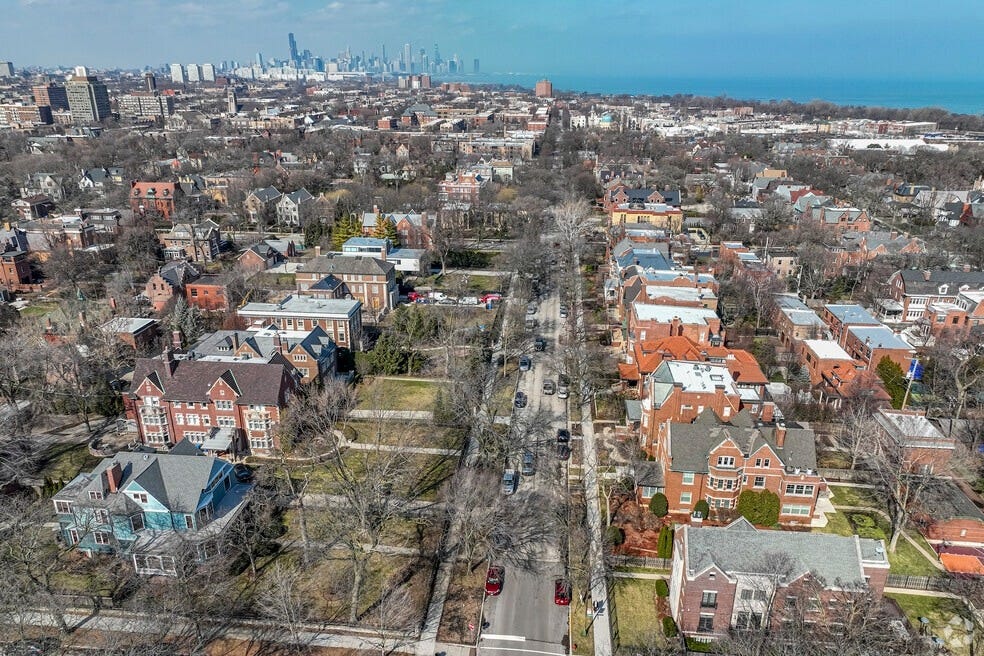
The phenomenon of the north migration was not known by 1804, all Northern states had abolished slavery, and scattered free Southern Blacks moved north. Of course, most Southern Blacks could not escape because they were trapped by the system of chattel slavery. After the Civil War and the Constitutional ban on slavery, most Black Southerners stayed in the South, expressing genuine belief in the promise of Reconstruction. With the massive arrival of new immigrants, it brewed intense rivalries for territories and scarce resources, and by the 1920s, the Chicagoland area had become broken up into at least seventy five communities, corresponding to isolated social and cultural demographics. What came as a result were neighborhoods occupied by largely homogeneous racial and ethnic groups with African Americans on the South and West side of the city in different legacy neighbors such as Kenwood and larger communities like Hyde Park.
Even though the Reconstruction Era of Chicago resulted in tons good for African Americans, with finding them new places to finally settle down and live in, there was not lots of hardship along the way and after the reconstruction era that plagued the city for a number of years. The most prominent of these hardships was the infamous Chicago Fire of 1871. The Great Chicago Fire started on the night of October 8th 1871 and burned until October 10th as it began on the city’s West Side, in the De Koven Street barn of Patrick and Catherine O’Leary. The cause of the fire is unknown but there are many theories from Vandals, milk thieves, a drunken neighbor, spontaneous combustion, even the O’Learys cow have all been pointed at things that could have started the fire but no one knows.
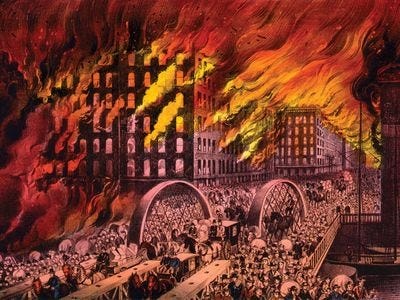
The fire ravaged through the city and by the end it had claimed about 300 lives, destroyed about 17,450 buildings, and caused $200 million in damage, with nearly 100,000 people left homeless. While the fire was horrible and caused lots of damage, it somewhat sped up the process of reconstruction for the city of Chicago. The era was defined with not just African American rights, but also rapid industrialization and expansion and both contributed to the fire and helped enable the growth and transformation afterwards. This makes the Chicago Fire a turning point in the history of the city, helping it become the modern industrial city it is today.
Even in the North and in Chicago especially, the promises of Reconstruction were at some points completed due to many different things. Some of these include things like housing segregation, job discrimination which limited black advancement throughout the system, many political powers were often still dominated by white elites, and violence while still less overt than in the South still existed and posed difficulties for African American individuals. Different institutions like the KKK would become prominent later in the city throughout 1920s thanks to the negatives of reconstruction era.
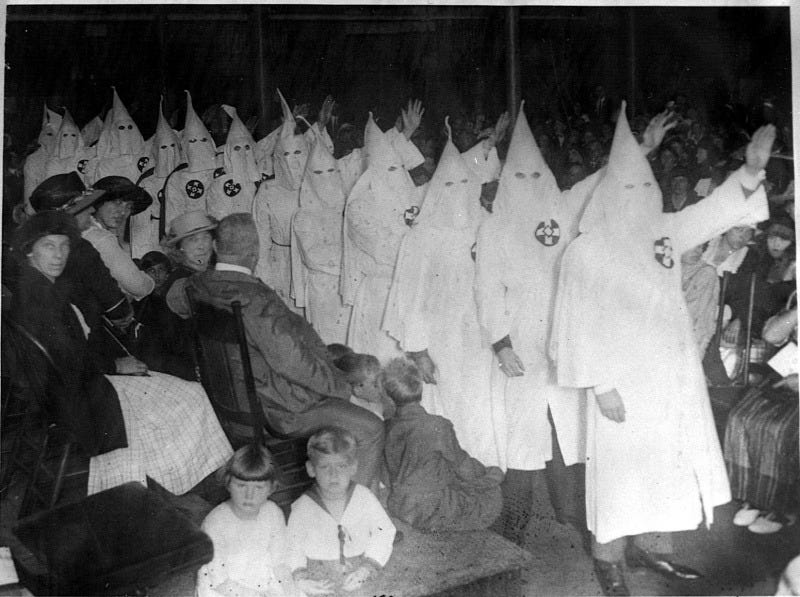
Chicago showed the rest of the nation that Reconstruction was a national process, not just Southern, Freedom did not automatically mean equality, and that Northern cities benefited economically from Reconstruction while avoiding many federal enforcement responsibilities.
Bibliography
"Chicago's 250 Year History of Segregation," https://www.chicagoreporter.com/chicagos-250-year-history-of-segregation/.
"History: The 1920's Saw The KKK's Rise In Illinois," https://www.nprillinois.org/illinois/2017-02-28/history-the-1920s-saw-the-kkks-rise-in-illinois.
“Racial Restriction and Housing Discrimination in the Chicagoland Area," https://digitalchicagohistory.org/exhibits/show/restricted-chicago/history.
"https://www.trumanlibrary.gov/photograph-records/62-302," http://Ku Klux Klan in Chicago.
“The Great Chicago Fire of 1871," https://www.architecture.org/online-resources/architecture-encyclopedia/the-great-chicago-fire-of-1871.
"Great Chicago Fire," https://www.britannica.com/event/Chicago-fire-of-1871.
"War's Aftermath," https://digital.lib.niu.edu/illinois/gildedage/chronological1.